My Smile Dentist — Bone Grafting
What Is Bone Grafting?
When jawbone has been lost (due to tooth loss, infection, gum disease, etc.), or is insufficient for placing dental implants, bone grafting helps rebuild or augment that bone. Grafting creates a scaffold so your body can regenerate and restore bone volume.
Who Needs It
You might need bone grafting if:
You’re planning for a dental implant but there isn’t enough bone in the jaw to anchor it securely.
Tooth extraction has led to jawbone loss and you want better future options.
Gum disease or infection has damaged the bone supporting your teeth Periodontal surgery.
The jaw has become weak or thin, making it unsuitable for denture fitting or any other artificial.
How the Procedure Works
Assessment & Imaging – We examine bone volume with X-rays / CT scans to decide if graft needed.
Preparation – Gum tissue is opened, infection or debris cleaned.
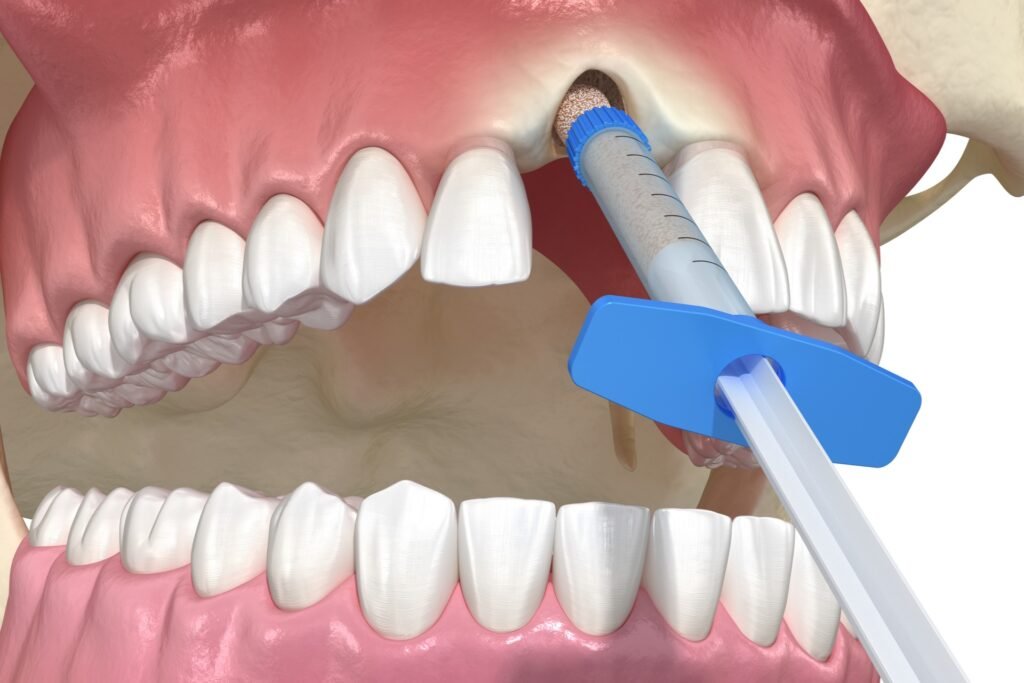
Placement of Graft Material – Bone graft material inserted into deficient area or extraction socket. Sometimes bone blocks are used.
Membrane / Protection – A membrane may cover the graft to protect it and guide bone growth.
Closure & Healing – Gums sutured over the site. Healing happens over weeks/months. Full integration might take 3-12 months depending on size & location.
Types & Materials of Grafts
| Type | What It Means / Material |
|---|
| Autograft | Bone taken from your own body (jaw, hip etc.) – tends to integrate well. |
| Allograft | Bone from another human donor (processed) – avoids second-surgery sites. |
| Xenograft | Bone derived from animal sources (e.g. bovine), processed for safety. |
| Alloplast | Synthetic graft material (e.g. bone substitutes) – useful when avoiding human or animal tissue. |
| Guided Bone Regeneration (GBR) / Membrane-Usage | Use of barrier membranes over graft to help bone grow in correct shape & block soft tissue infiltration |
Why Choose My Smile Dentist for Bone Grafting
Experienced surgeons / periodontists skilled in bone grafting procedures
High-quality graft materials (autograft/allograft/xenograft/synthetic) to match patient’s needs
Advanced imaging and planning to ensure graft placement is precise, minimizing complications
Gentle techniques & clear aftercare instructions so healing is smooth
EXCELLENTTrustindex verifies that the original source of the review is Google. My wife and I recently got our treatment done at My Dentist. Both Dr Bhawana and Dr Nishant did a wonderful job. Not only are they qualified, and experts in their respective fields ,but also have a wonderful temperament and great ambience . We would highly recommend them !!Posted onTrustindex verifies that the original source of the review is Google. I had pleasant dental experience at My dentist. Dr Bhawna and Dr Nishant are very cooperative and supportive.Posted onTrustindex verifies that the original source of the review is Google. I had visited this clinic after consulting many other clinics where most of them suggested a root canal. But when I came here, Dr. Bhavna honestly told me that I only needed cleaning and a simple filling, and that a root canal was not required. This is how a true doctor should be – not increasing unnecessary expenses for patients. I am very thankful to Dr. Bhavna. She is one of the most polite and genuine doctors I have ever met.Posted onTrustindex verifies that the original source of the review is Google. Very friendly doctor, the work and results are amazing.Posted onTrustindex verifies that the original source of the review is Google. Dr. Nishant Tyagi is an exceptional dentist—calm, professional and incredibly knowledgeable.He takes the time to explain every step of the treatment and ensure you are comfortable throughout. I felt completely at ease and in safe hands. Highly recommend for anyone looking for quality dental care.Posted onTrustindex verifies that the original source of the review is Google. Dr. Nishant Tyagi is one of very good Dentists. Wish him all the best. May God bless.
Book Your Bone Grafting Consult
Need stronger jawbone for implants or restoration? We can evaluate and plan the right grafting procedure for you.
Awards & Recognition

2000

2005

2008

2011
2012
2014
2017
2018
Frequently Asked Questions
Will bone grafting hurt?
Not during the procedure—local anesthesia (or sedation if needed) is used. Discomfort afterwards is normal, managed with medications.
How long before I can place a dental implant after grafting?
That depends on graft size, location, material used, and healing. Usually a few months (3-6), sometimes more.
Is grafting visibly noticeable? Will it affect my appearance?
Usually not visibly once healed. You might have swelling initially, but in most cases final result restores natural jaw contour.